

What It Is, How It Works, and Whether It’s Right for You
Recovering from an eating disorder isn’t just about changing what you eat. It’s about rebuilding your relationship with food, your body, movement, and yourself.
It’s learning how to navigate everyday situations that once felt impossible-like going out to dinner without anxiety, taking a vacation without obsessing over food, wearing clothes that fit your recovered body, and trusting yourself around meals again.
These moments don’t usually happen inside a therapy office. They happen every day. That’s why many people eventually find themselves wondering:
“I have a therapist. I have a dietitian. Why do I still feel like I struggle so much between appointments?”
For many people, eating disorder recovery coaching fills that gap.
While therapy often focuses on understanding emotions, treating mental health conditions, and processing deeper psychological experiences, recovery coaching focuses on helping you apply recovery in real life. It’s practical, collaborative, and centered on turning insight into action.
Whether you’re beginning recovery, transitioning out of treatment, or simply looking for more support between appointments, this guide will explain everything you need to know about eating disorder recovery coaching.
Table of Contents
- What Is an Eating Disorder Recovery Coach?
- What Does an Eating Disorder Recovery Coach Do?
- Recovery Coach vs. Therapist
- Recovery Coach vs. Dietitian
- Who Benefits From Recovery Coaching?
- When Is Someone Ready?
- What Happens During Coaching?
- Why Recovery Coaching Can Be So Helpful
- The Neuroscience Behind Recovery
- Recovery Coaching After Treatment
- Is Online Coaching Effective?
- How to Choose the Right Recovery Coach
- Questions to Ask Before Hiring One
- Frequently Asked Questions
What Is an Eating Disorder Recovery Coach?
An eating disorder recovery coach is a professional who helps individuals navigate the everyday challenges of recovery through accountability, education, practical problem-solving, and encouragement. Unlike licensed therapists, recovery coaches do not diagnose or treat mental health conditions. Instead, they focus on helping clients consistently practice recovery in their daily lives.
Recovery coaching often addresses situations like:
- Completing meals and snacks consistently
- Reframing eating disorder thoughts
- Working through body image struggles
- Preparing for vacations and holidays
- Navigating restaurant meals
- Grocery shopping
- Returning to movement in a healthy way
- Building flexible routines
- Coping with anxiety without using eating disorder behaviors
- Creating a life that feels meaningful outside the eating disorder
Many people describe recovery coaching as the bridge between appointments, especially as they often have the ability to text their coach outside of session (not everyone offers this, so be sure to ask).
What Does an Eating Disorder Recovery Coach Do?
Although every coach has a unique style, most recovery coaching focuses on helping clients confidently navigate everyday recovery challenges.
Accountability
Recovery asks people to repeatedly choose behaviors that often feel uncomfortable before they feel natural. A coach provides encouragement, accountability, and support while those new habits are being built.
Rather than simply checking whether goals were completed, eating disorder coaching helps clients understand what got in the way and how to move forward without shame.
Practical Problem Solving
Recovery involves hundreds of situations that don’t come with an instruction manual.
A coaching session might focus on questions like:
- How should I approach my family vacation?
- I’m terrified of eating dessert at my friend’s birthday. What do I do?
- I skipped my afternoon snack. How do I recover from that without spiraling?
- My body image is terrible today. How do I still go to the beach?
Instead of only exploring why these situations feel difficult, eating disorder recovery coaching also focuses on creating practical plans for navigating them.
Building Recovery Skills
Recovery isn’t simply about eliminating eating disorder behaviors. It’s about developing healthier ways to respond when stress, uncertainty, perfectionism, or difficult emotions arise.
Depending on your goals, eating disorder recovery coaching may focus on developing skills like:
- Emotional regulation
- Cognitive reframing
- Self-compassion
- Distress tolerance
- Flexible thinking
- Identity development
- Nervous system regulation
- Healthy routines
- Values-based decision making
- Identifying strengths (I like using the VIA Institute on Character website with my clients to help identify strengths, it’s an easy 12 minute survey)
These skills become the foundation for long-term recovery.
Support Between Sessions
One reason many people seek recovery coaching is because recovery doesn’t pause between appointments.
Many coaches offer forms of support outside scheduled sessions, such as text support, meal support, or brief check-ins during particularly challenging moments. This additional consistency can make recovery feel less overwhelming. If 24/7 text support is important to you, that is something I offer through my practice, and you can find more detailed information here.
/
Eating Disorder Recovery Coach vs. Therapist
Although coaches and therapists often work together, they serve different roles.
| Therapist | Recovery Coach |
|---|---|
| Diagnoses mental health conditions | Does not diagnose mental health conditions |
| Licensed clinical provider | Coaching professional (can get certification, not necessary to practice but highly encouraged) |
| Processes trauma and psychological concerns | Focuses on implementing recovery skills |
| Provides psychotherapy | Provides accountability and practical guidance |
| Often explores why patterns exist | Focuses heavily on how to move forward |
Many people work with both simultaneously because each professional provides support in unique ways.
Eating Disorder Recovery Coach vs. Registered Dietitian
Registered dietitians are experts in nutrition. They help clients restore adequate nourishment, normalize eating patterns, challenge food rules, and provide medical nutrition therapy.
Recovery coaches do not replace dietitians. Instead, coaching focuses on helping clients successfully apply nutritional recommendations in everyday life.
For example: A dietitian may recommend introducing a fear food. A recovery coach may help you plan when to try it, support you afterward, and process the experience so future exposures feel less intimidating. Together, these roles often complement one another really well in the recovery process.
Who Benefits From Eating Disorder Recovery Coaching?
Recovery coaching may be a good fit for individuals who:
- Feel stuck despite attending therapy
- Need more accountability
- Recently completed residential treatment, PHP, or IOP
- Want support applying recovery skills
- Feel isolated in recovery
- Want practical guidance rather than only talking about recovery
- Struggle with body image
- Want support navigating meals, restaurants, travel, or social situations
- Are committed to working toward recovery, even if they’re still scared
- Want someone to reach out to during the week in between appointments
You don’t have to feel completely confident before working with an eating disorder coach.
When Is Someone Ready for Eating Disorder Recovery Coaching?
Many people believe they need to feel fully motivated before seeking additional support. In reality, motivation often follows action—not the other way around. You don’t need to wake up one morning completely fearless. You simply need enough willingness to continue practicing recovery, even when it’s uncomfortable.
Recovery coaching helps people build confidence by repeatedly taking small recovery-oriented actions. Each decision strengthens trust in themselves. Eventually, those small decisions begin to feel less difficult.
That’s how recovery grows.
Why Recovery Coaching Can Make Such a Difference
Knowledge alone doesn’t always create change. Many people intellectually understand recovery. They know they should eat consistently. They know body checking isn’t helpful. They know restriction usually increases eating disorder thoughts.
Yet in difficult moments, knowledge often loses to anxiety. Eating disorder ecovery coaching focuses on narrowing the gap between knowing and doing.
Instead of simply learning about recovery, clients repeatedly practice recovery until healthier responses begin feeling more automatic.
What Happens During an Eating Disorder Recovery Coaching Session?
Every recovery coach has a different style, but most sessions are collaborative, practical, and focused on helping you navigate real-life challenges.
Rather than simply talking about recovery, coaching often centers on applying it.
A typical session may include:
- Celebrating recovery wins from the past week
- Identifying situations that felt difficult
- Challenging eating disorder thoughts
- Learning practical coping skills
- Planning for upcoming meals or events
- Creating recovery goals for the week ahead
- Problem-solving obstacles before they happen
For example, instead of waiting until after a family vacation to discuss what went wrong, you might spend a session preparing for the trip beforehand—making a plan for meals, movement, body image challenges, and unexpected situations.
The goal is to leave every session with greater confidence and a clear direction for moving forward.
The Neuroscience Behind Recovery Coaching
Eating disorders are often misunderstood as being “just about food.” In reality, research suggests they involve complex interactions between learning, habits, anxiety, emotion regulation, cognitive flexibility, reward processing, and the brain’s threat detection systems.
Over time, eating disorder behaviors become practiced responses to difficult emotions or uncertainty. The encouraging news is that the brain remains capable of change throughout life through a process called neuroplasticity. Every time you respond differently to an eating disorder urge—whether that’s eating the snack, resting instead of exercising, or allowing yourself dessert—you give your brain an opportunity to strengthen new neural pathways.
Those moments may feel small, but recovery is made up of tiny steps in the right direction. Recovery isn’t built by having one perfect week. It’s built by repeatedly practicing healthier responses until they gradually become more automatic.
This is one reason consistency matters far more than perfection.
Eating Disorder Recovery Coaching After Treatment
Many people describe leaving treatment as one of the hardest parts of recovery.
During residential treatment, partial hospitalization (PHP), or intensive outpatient programs (IOP), meals are structured, support is readily available, and recovery is often the primary focus. Then suddenly you’re home.
You’re making your own decisions again, and work resumes, school resumes. Friends may not understand what recovery looks like. The eating disorder begins looking for opportunities to return. This transition can feel overwhelming.
Recovery coaching can provide continued accountability and support while you learn how to apply recovery independently in everyday life. Many people find that coaching helps bridge the gap between structured treatment and long-term recovery.
Is Online Eating Disorder Recovery Coaching Effective?
For many people, absolutely. Virtual coaching has made recovery support accessible regardless of where someone lives. Instead of being limited to providers nearby, individuals can choose a coach whose philosophy, experience, and approach best fit their needs. I have worked with clients in India, Germany, England, and more.
Online coaching also allows recovery conversations to happen in real-life environments. Sessions can take place from your kitchen before a meal, your living room before guests arrive, or your home before leaving for vacation. For many clients, this makes the support feel immediately applicable to daily life.
What Should You Look for in an Eating Disorder Recovery Coach?
Choosing the right eating disorder coach is an important decision. Not every coach has the same training, experience, or philosophy.
Here are a few questions worth asking before beginning:
- What education or training have you completed?
- What types of clients do you typically work with?
- How do you collaborate with therapists and dietitians?
- What happens if someone needs a higher level of care?
- What does support between sessions look like?
- What is your coaching philosophy?
- What goals do clients usually work toward?
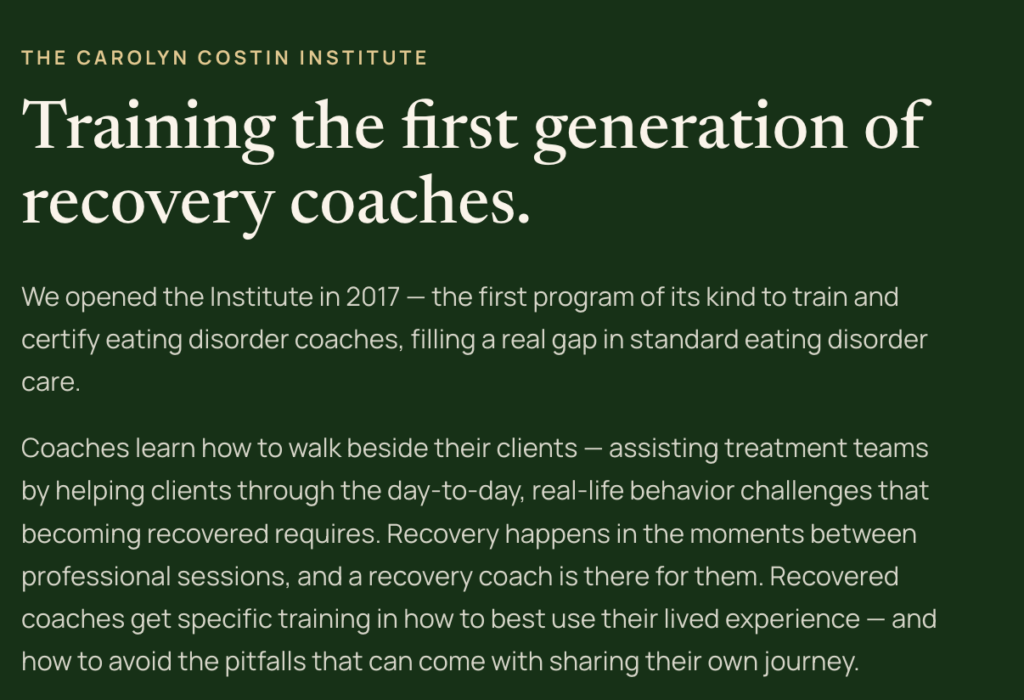
A qualified eating disorder coach should understand the limits of coaching, communicate clearly about their scope of practice, and encourage collaboration with other healthcare professionals when appropriate. The Carolyn Costin Institute has a rigorous training program.
Common Misconceptions About Eating Disorder Recovery Coaching
“If I need a coach, therapy must not be working.”
Not at all. Therapy and coaching serve different purposes. Many people benefit from having both because they address different aspects of recovery.
Therapy often explores emotions and underlying psychological patterns. Coaching focuses on implementing recovery in everyday life.
“I have to be completely ready before I start.”
Very few people begin recovery feeling fully ready. Most people feel uncertain. Some part of them wants recovery while another part feels terrified.
That’s normal. Eating disorder recovery isn’t about waiting until fear disappears, it’s about learning how to move forward alongside it.
“Recovery coaching replaces therapy.”
Recovery coaching is not psychotherapy. It does not diagnose or treat mental health conditions. Instead, coaching often complements therapy by helping clients practice what they’re learning between appointments.
Frequently Asked Questions
Can I have both a therapist and a recovery coach?
Yes. Many people find that therapy and coaching complement each other well because they provide different forms of support.
Is recovery coaching virtual?
Many recovery coaches work virtually, allowing clients to receive support regardless of location.
Does coaching include meal support?
Some coaches offer meal support or check-ins, while others focus exclusively on scheduled sessions. It’s helpful to ask about available services before beginning.
How long does recovery coaching usually last?
There’s no universal timeline. Some people work with a coach for several months, while others continue longer depending on their goals and stage of recovery.
Can coaching help with body image?
Yes. Body image concerns are one of the most common reasons people seek recovery coaching. Sessions may focus on reducing body checking, responding differently to negative thoughts, and developing a healthier relationship with your body.
Is coaching appropriate for every eating disorder?
Recovery coaching may support individuals recovering from anorexia nervosa, bulimia nervosa, binge eating disorder, ARFID, OSFED, or other forms of disordered eating, depending on the coach’s experience and scope of practice.
Does insurance cover recovery coaching?
Most recovery coaching services are not covered by insurance because coaching is different from psychotherapy or medical treatment.
Can coaching help after residential treatment?
Yes. Many people begin coaching after leaving residential treatment or intensive outpatient programs to maintain momentum and continue building confidence independently.
My Philosophy on Recovery
I believe full recovery is possible for everyone. While the path may look different from person to person, I don’t believe anyone is “too sick,” “too chronic,” or beyond hope. The brain is capable of change throughout life, and with consistent experiences that challenge the eating disorder, new neural pathways can be built and strengthened.
My approach combines neuroscience with compassion. Understanding how the brain learns, adapts, and becomes stuck in eating disorder patterns can help reduce shame and make recovery feel more understandable. At the same time, lasting change doesn’t come from knowledge alone, it comes from practicing new behaviors with patience, self-compassion, and support.
Recovery isn’t about becoming perfect, it’s about teaching your brain that safety, flexibility, and freedom are possible.

Final Thoughts
Recovery is rarely linear. There will be days when recovery feels easier and days when old thoughts become louder. Progress doesn’t mean those thoughts never return. It means they no longer determine your decisions.
Every recovery-oriented choice—even the ones that feel insignificant—is another investment in the life you’re building.
If you’re looking for practical guidance, accountability, and support between therapy sessions or after treatment, eating disorder recovery coaching may help bridge the gap between understanding recovery and truly living it.
Recovery isn’t about becoming a different person.
It’s about becoming more fully yourself.
Additional Resources
If you’re looking for more resources to help you in your eating disorder recovery journey, you may find these helpful:
- The Ultimate Guide to the Best Eating Disorder Podcasts
- How to Reframe All or Nothing Thinking in Eating Disorder Recovery
- ANAD Peer Support Groups
- The Shifts App-a 5 star app for eating disorder recovery support
If you’re interested in personalized support, you can also learn more about my virtual eating disorder recovery coaching and explore whether it’s the right fit for your recovery journey.

Merrit Elizabeth Stahle is an Eating Disorder Recovery Coach certified by The Carolyn Costin Institute. She holds a master’s degree in Health Promotion Management and a certification in Applied Neuroscience. With many years of experience, she has worked with hundreds of clients, parents, and treatment team members to support lasting recovery. Fully recovered herself, she combines professional training with lived experience to help women rebuild trust, confidence, and freedom around food and body.

read or leave a comment +
Hide Comments –